
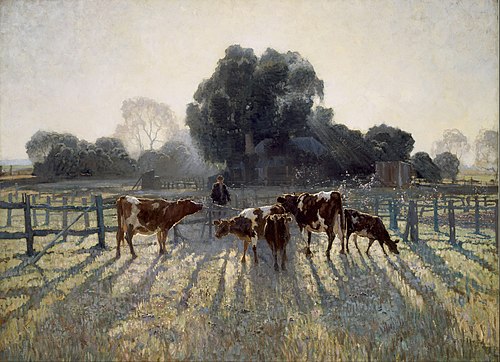
Spring Frost
Elioth Gruner, 1919
Morning light breaks across frost-covered grass as cattle emerge into a warming landscape. Painted en plein air, Spring Frost captures not rural life itself, but the sensual presence of light. Gruner softens realism in favor of atmosphere, allowing sunlight to dissolve form into feeling.
View Details →
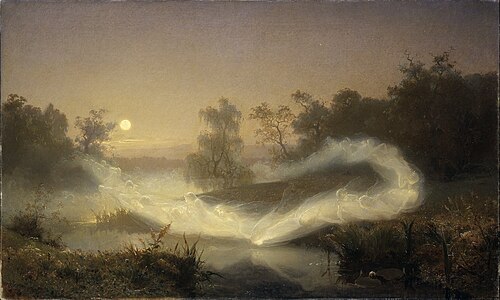
Dancing Fairies
August Malmström, 1866
Fairies rise from the mist in a moonlit meadow, embodying the fragile boundary between nature and myth. Drawing on Scandinavian folklore, Malmström presents the landscape as alive, enchanted, and quietly dangerous when disrespected.
View Details →
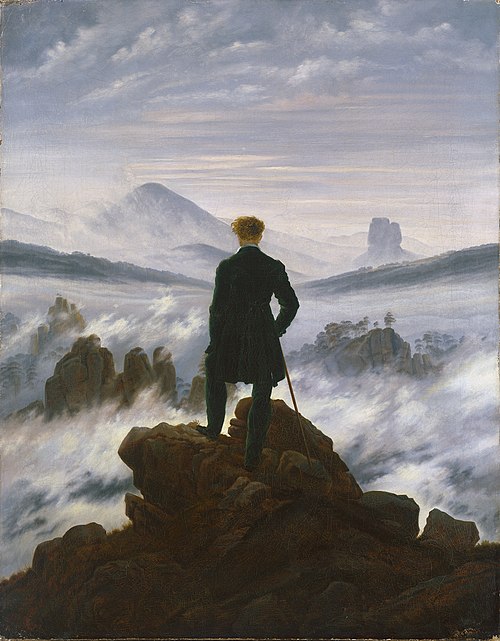
Wanderer above the Sea of Fog Caspar
David Friedrich, 1818
A lone figure stands above a sea of mist, gazing into the unknown. The landscape evokes the Romantic sublime, turning nature into a space of reflection and inner searching.
View Details →
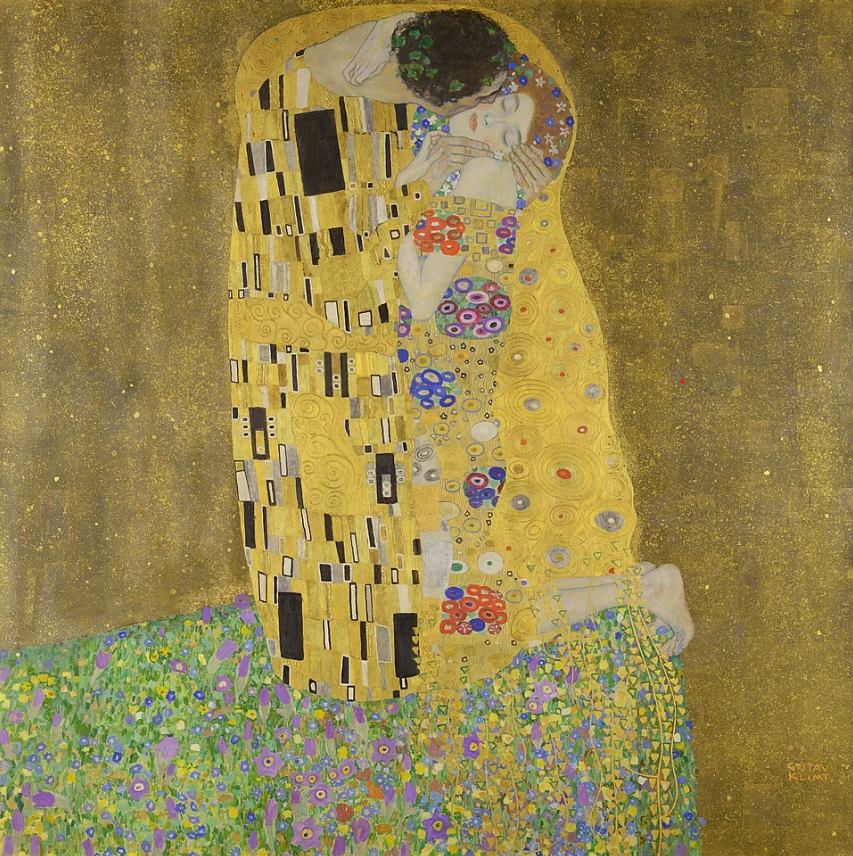
The Kiss
Gustav Klimt, 1907-1908
Two lovers embrace, wrapped in golden robes that dissolve the boundaries between their bodies. Klimt's masterpiece of the Vienna Secession merges intimacy with ornamental abstraction, celebrating love as both earthly connection and transcendent union.
View Details →

A Sunday on La Grande Jatte
Georges Seurat, 1884-1886
Parisians stroll along the Seine in frozen leisure, rendered entirely in dots of pure color. Seurat's pointillist technique transforms a casual afternoon into a timeless tableau, where scientific precision meets quiet social observation.
View Details →
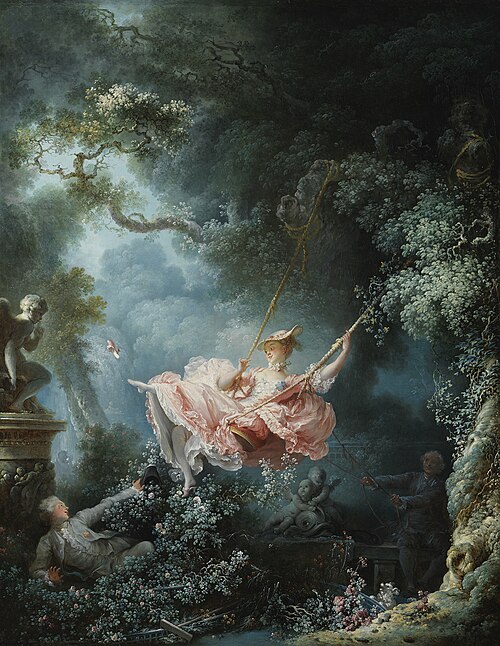
The Swing
Jean-Honoré Fragonard, 1767
A young woman swings through a sunlit garden as her lover watches from below. Fragonard’s Rococo scene captures playful eroticism and pastoral fantasy in loose, luminous brushwork.
View Details →
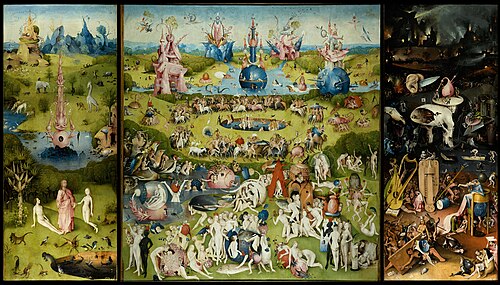
The Garden of Earthly Delights
Hieronymus Bosch, 1490-1510
A triptych depicting paradise, earthly pleasure, and hell in surreal, hallucinatory detail. Bosch's enigmatic vision presents humanity suspended between divine creation and moral chaos, populated by fantastical creatures and symbolic imagery.
View Details →